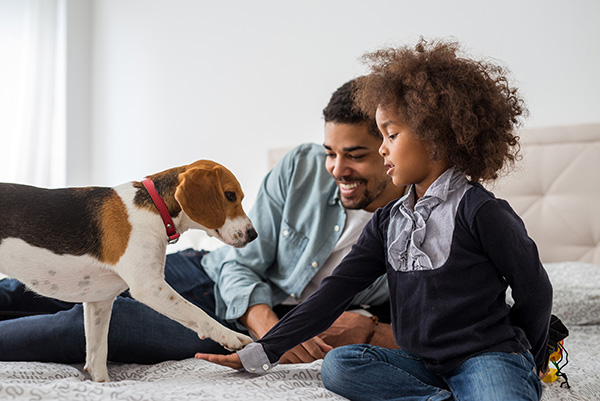
Often, that moment comes in childhood with the death of a pet, especially a dog or cat.
We bring pets into our lives, name them, adjust to their quirks, and entwine them into our daily routines.
But the short lifespan of dogs and cats throws us a curveball. We know that someday we’ll have to say a sad goodbye.
The loss can hit us hard. Children will watch and listen, taking their cues from adults.
Angela Shook is an end-of-life doula specializing in providing compassionate support for companion animals and the people who love them.
Her work has taught her that these moments are valuable opportunities to help children shape a healthy understanding of death as a natural part of life.
“It’s tempting to protect children from this painful reality,” she says.
Plenty of us take that road.
But that’s a missed opportunity. It leaves children to fill in the blanks about this mysterious thing called death, sometimes in unhelpful ways.
Shook says that when adults and caregivers manage the challenge well, children can start building strong emotional tools to use throughout their lives.
How do we do that?
She offers these suggestions and tips:
- Talk calmly, comfortably, and openly about death and grief. When caregivers express their grief and sadness, they also show children it is OK to share their feelings. This permission to grieve helps children lay a foundation for a healthy understanding of death.
- Don’t expect children to grieve like adults. Children often have a wide range of emotions after a death, and they can handle only small amounts of pain and grief at a time. It’s normal for young children to be tearful or sad one moment and happily play the next.
- Be clear and honest with children. Answer their questions as best you can. The truth is easier for them to manage than the fantasies that arise when a scary subject like “death” is left to their vivid imagination.
- Avoid euphemisms like “being put to sleep” or “going to a better place.” Clear, concrete, and accurate explanations help avoid pitfalls, like making children afraid of falling asleep or somehow feeling they were responsible for the pet’s death.
- If a family decides euthanasia is the best decision for an animal, it’s helpful for children to know they are not “killing” their pet but rather that illness or age has caused the death. The family has chosen to relieve the pet of pain and suffering as a compassionate act of love.
- Find appropriate ways to include children in the process. Allow them to say goodbye to their animal friend and let them help plan ways to memorialize the pet.
- Share the news of the death with the child’s extended family, teachers, and peers. This can reassure the child that they are not alone in their grief.
Shook often accompanies a veterinarian on home visits for pet euthanasia. She tells of a recent visit that illustrates how allowing children to be part of these experiences can be healing for everyone in the family:
“I joined a mobile veterinarian for the euthanasia of the elderly dog of a family with two young girls. We were able to help answer the children’s questions and validate the family’s emotions.
“I often carry a toy doctor’s kit to help explain procedures, include the children in the process, and satisfy their curiosity.
“I also carry small packets of tissues. In this situation, I asked the younger child if she would like to be responsible for handing them out.
“I shared that mom and dad may cry and that it was OK if she and her sister did, too.
“I explained that it is natural to cry when we are sad and that we were there to help relieve her pet of pain.
“The young girl was happy to have a ‘job,’ and her role helped create a safe place [for the family] to share their grief.
“She very sweetly offered comfort to her parents and shared the tissues with her family as they said goodbye to their sweet dog.”
With Shook’s help, this family was able to give their beloved companion a peaceful and pain-free death.
They also gave their children a positive experience that will help them have a healthy relationship with death and dying throughout their lives.
You can learn more about Angela Shook’s work at https://angelashook.com/